
After building capital, you may reach a point where you want a substantial investment in a property worth keeping. The appeal is understandable: rental income, a place to hold wealth, and possible depreciation benefits. But buying the building is the beginning of that plan. Keeping it useful, competitive, and properly financed is what makes the ownership years matter.
Consider a hypothetical apartment asset acquired for durable demand and steady operation rather than a quick sale. Several years later, its location remains attractive, but a major system needs replacement and nearby housing has improved. Continuing to own the property may still be sensible. It now requires a current plan, not a repetition of the acquisition presentation.
At BlackGuard, we want long-term ownership to be a choice you understand. What is the property meant to do for you? What money will it need along the way? Why does it deserve capital you could use elsewhere? An intention to hold for years should come with clear answers and a team responsible for the ongoing work.
Would you still choose to own it today?
The original investment thesis should remain available for comparison with current facts. What did the owner believe about demand, operating costs, improvements, and financing? Which parts were supported by evidence, and which were assumptions? What has changed since then?
A review should not become a search for reasons to defend the original decision. It should explain why continued ownership is attractive now, including the work and capital still required. A property can remain a good holding for reasons that differ from the original acquisition thesis, but those reasons deserve to be stated.
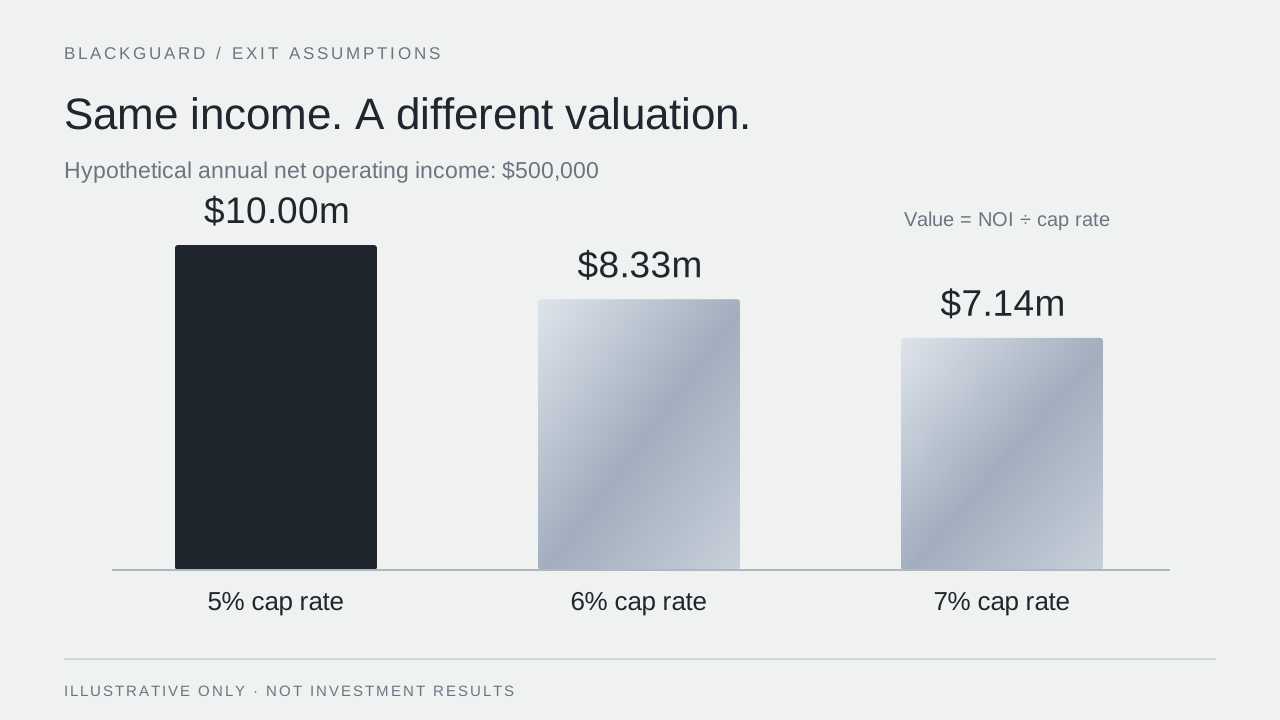
This is also why a planned long hold and a distant exit forecast should not be confused. Long-term ownership can be supported by ongoing economics. A future sale date is only one possible event. Our discussion of ten-year exit assumptions explains that distinction.
The building needs a budget after you buy it
Buildings require spending to remain functional and competitive. Some work maintains existing capability; other work may improve the product. Both affect cash available for distribution and the capital necessary to continue the ownership plan. A review that ignores those needs can make current income look more durable than it is.
For the hypothetical property, separate a required mechanical replacement from an elective common-area redesign. Both may be worthwhile, but their timing, purpose, and consequences differ. Ask what happens if they compete for the same funds or must occur while other work is underway.
The owner should be able to explain how reserves and future spending assumptions fit together. That does not require pretending every repair can be predicted. It requires acknowledging uncertainty and identifying how decisions will be made when the building needs more than the original budget expected.
Keep the loan working with the ownership plan
A long-term ownership objective can outlast the debt placed on the asset. Review maturities, rate exposure, covenant requirements, and extension conditions before they become immediate constraints. The question is whether the financing still supports the operating plan under current conditions.
The OCC's refinance-risk guidance identifies project performance, timing, liquidity, and refinancing cost as relevant factors. It is bank guidance, not a claim about BlackGuard's regulatory status. It also provides a useful reminder that a refinance is a future transaction with conditions, not an administrative renewal.
When a new financing choice becomes available, evaluate its effects on both flexibility and obligations. Additional borrowing may create a distribution while increasing future pressure. Reducing debt may improve some aspects of resilience while committing more equity. Neither choice should be judged from the immediate cash movement alone.
Know who can make the big decisions
Investors need to understand who can approve major work, financing changes, sales, or additional capital requirements. They should also understand the information they receive and the rights attached to their investment. A shared intention to hold for years is not a replacement for clear governing documents.
Different investors may eventually want different things. One may favor additional improvements, another may need liquidity, and another may prefer to preserve current cash. The ability to address those preferences depends on the actual structure and available options, not merely the relationship with the manager.
Review conflicts and compensation as well. Fees and incentives should be understandable across acquisition, management, financing, and disposition. The purpose is not to assume a conflict determines the outcome. It is to make sure the decision and its incentives can be examined together.
Tax planning belongs beside the operating plan
Tax considerations may influence how an owner evaluates a disposition or reinvestment. They should not be treated as an instruction to hold an economically weak asset forever. Compare the consequences of the available choices with qualified advisers, including the cost and risk of continuing to own.
IRS Publication 544 explains rules for qualifying like-kind exchanges of real property and the treatment of dispositions. Section 1031 can defer certain gain when its requirements are met, but reinvesting with the same management company does not automatically qualify. Partnership-interest exchanges generally do not receive that like-kind treatment.
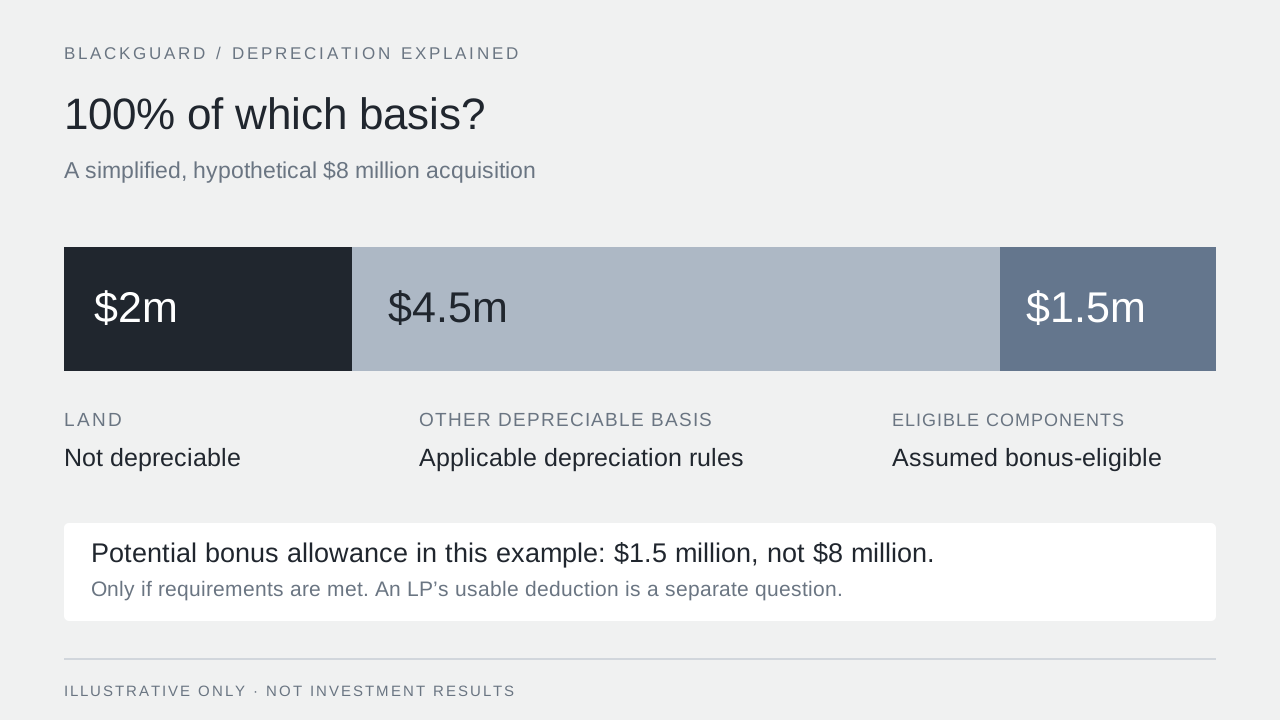
Likewise, prior depreciation affects basis and can matter when property is sold or exchanged. Long-term ownership does not make those rules irrelevant. Our separate cost-segregation and bonus-depreciation article explains why a current deduction and a future disposition need to be considered together.
Keep room for the rest of your financial life
A property can remain attractive while the investor's needs change. Conversely, an investor may still want long-term real estate exposure while a particular property becomes less compelling. Distinguish the desired role from the individual holding that currently fills it.
The SEC's asset-allocation guidance connects an investment mix with time horizon and risk tolerance. That does not mean an illiquid private investment can be rebalanced on demand. It means the investor should understand the commitment and consider how it fits alongside other assets and obligations.
Building capital through other investments can help you prepare for a longer-term purchase. It does not mean every dollar you receive should go into the next multifamily deal. Keep room for cash needs, other opportunities, and the costs of ownership. If the right property is not available, the decision can be to wait. A year-end tax discussion should not turn an unsuitable property into a required purchase.
What should ongoing reporting explain?
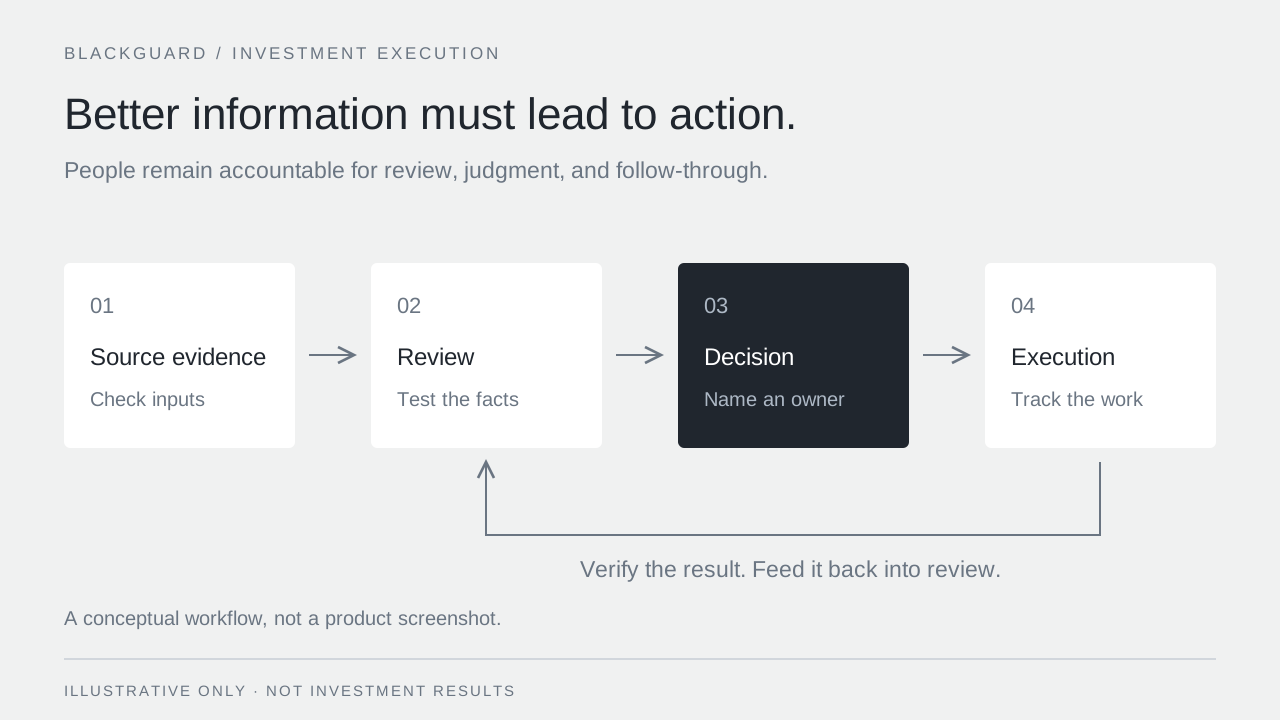
Useful reporting connects results to decisions. It should describe material changes in operations, capital work, financing, and the investment thesis. If a plan has changed, explain what evidence prompted the change and what management is doing next. A status update should do more than repeat that the asset is performing as expected.
Technology can help keep that information organized and make responsibility visible. It cannot decide that an unexplained variance is harmless or that a difficult issue no longer needs attention. The quality of oversight remains tied to the people reviewing the information and acting on it.
The goal is to own something because it continues to deserve your money, rather than because you are waiting and hoping for a distant sale. Rental income, reinvestment, and potential tax benefits can support that goal, but none replaces a sound property and an affordable ownership plan. We want investors to understand both why we would buy and why we would keep holding.