You may hear that an apartment property is a good buy because it would cost much more to build it today. That is worth knowing. But if you plan to own it for years, there is another question to ask: what if the next competitor finds a better or less expensive way to deliver the housing residents want?
What if a future competitor can deliver housing more efficiently? What if the change is modest rather than revolutionary? What if the competitor offers a different layout instead of simply reproducing the same building at a lower price? These are questions for underwriting. They are not predictions that robots will soon make conventional apartments worthless.
At BlackGuard, we pay attention to how housing is built and how it could improve. We do not need to know which technology will win to ask whether a property can keep competing. That matters before we commit money for years, particularly if the case for buying assumes that future construction will always be too expensive to threaten it.
Expensive to replace does not mean impossible to compete with
Replacement cost asks what it might cost to reproduce or substitute for an asset. Market value asks what someone would pay for it under the conditions that matter at the time. Those concepts can inform each other without being equal. A property can be expensive to replace and still face weak demand or insufficient operating income.
For a hypothetical acquisition, the investor might compare the purchase price with an estimate for new construction. Before treating that comparison as a margin of safety, examine what the estimate includes. Does it account for land, site work, professional fees, financing, delays, and the actual product residents would choose?
A comparison with a more expensive building may say little about a smaller or differently configured competitor. The relevant substitute is not always an identical replica. That is why changes in housing products belong beside construction-cost research.
There is real research behind offsite construction
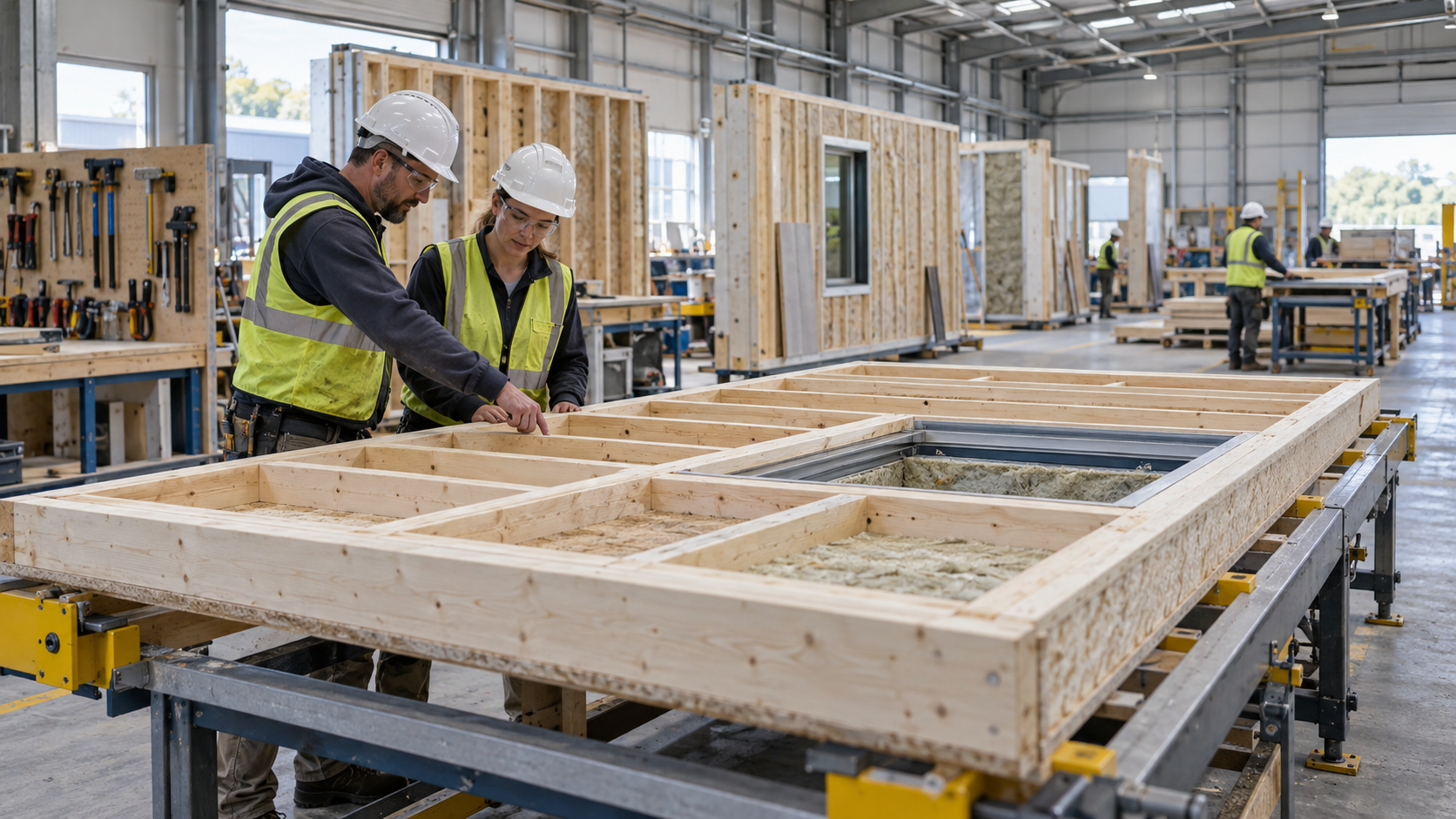
HUD's Offsite Construction for Housing research roadmap, accepted in 2022 and published in 2023, examines offsite housing production and the research needed to support its development. It provides a grounded place to begin a discussion that is often dominated by promotional claims.
The existence of that research supports taking the subject seriously. It does not establish that every method is cheaper in every location, or that costs will fall by a particular percentage. Manufacturing capacity, transport, site conditions, approvals, financing, and the ability to repeat a design can affect the result.
When reviewing a new method, distinguish a completed demonstration from a repeatable business. Ask whether the stated cost reflects the whole delivered project and whether the schedule includes the steps that occur outside the factory. A lower price for one component is not automatically a lower price for a completed, occupied property.
Innovation can change more than the construction budget
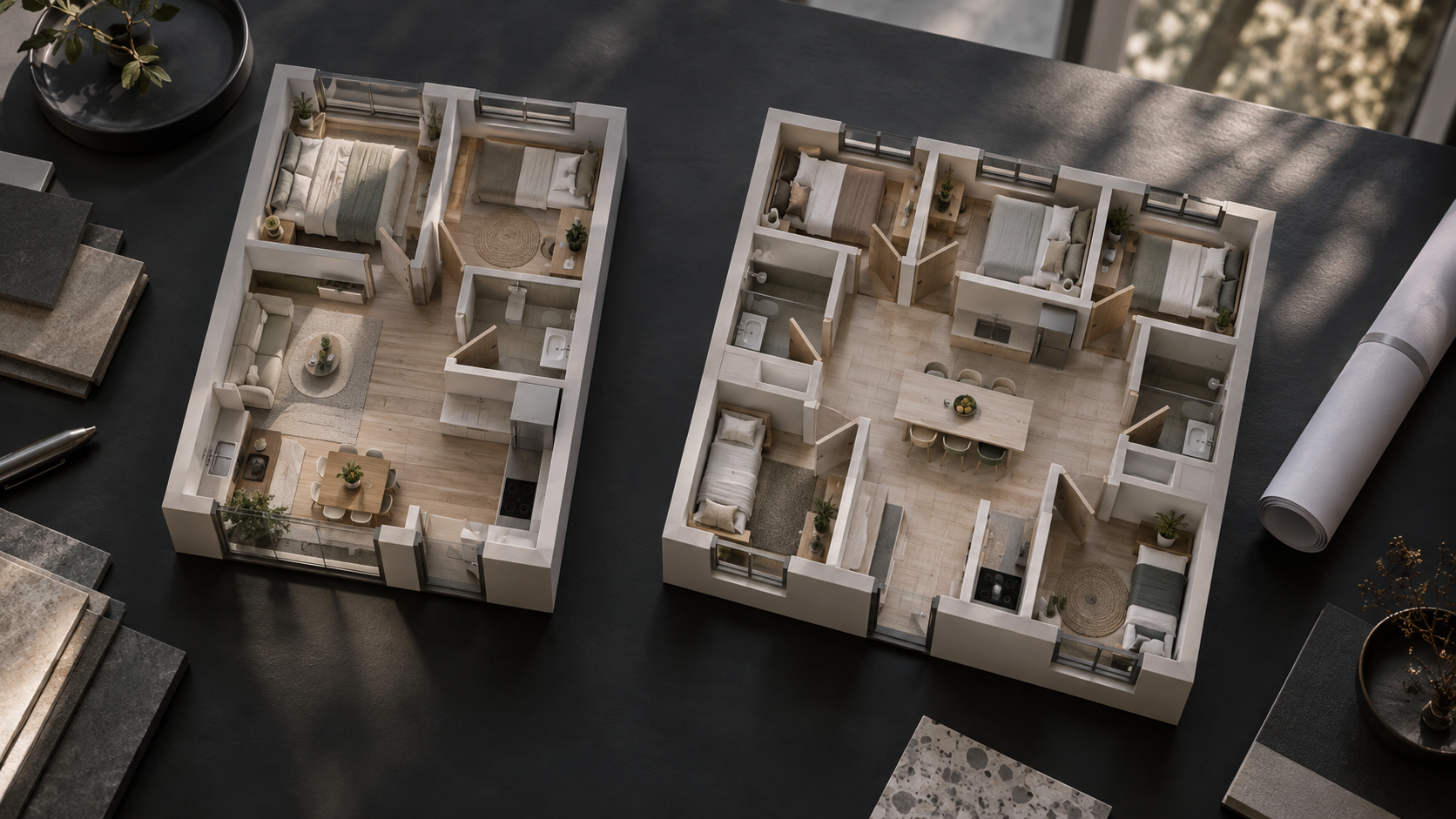
A competitor may improve the resident experience without dramatically reducing total development cost. A better layout, lower utility burden, or more practical arrangement for unrelated adults could make the housing offer different. The competitive pressure may appear in leasing choices rather than in a headline about cheap construction.
HUD's assessment of shared housing describes housing models and their challenges. We use that as evidence that different configurations deserve study, not as proof that any particular model will outperform conventional apartments. Local demand and operating realities remain central.
For an existing property, the useful question is which resident need it serves especially well. If its appeal rests only on being cheaper than new construction, a change in the alternative could matter. If residents value a location, layout, or service that is difficult to replicate, the comparison becomes more specific.
Ask what a cheaper competitor would change
Consider three possibilities for a hypothetical market. In the first, delivery methods change little during the ownership period. In the second, competing projects become somewhat easier or faster to deliver. In the third, a new product meets a resident need that the existing property handles poorly. No probability is assigned here. These are prompts for analysis, not forecasts.
For each possibility, ask what would happen to achievable rents, concessions, leasing time, and required improvements. Which part of the operating plan would be affected first? Could the property adapt at a reasonable cost, or would the difference be structural?
Keep the assumptions visible. A scenario that says costs fall needs to explain which costs and for whom. A scenario that says demand shifts needs to identify the resident choice involved. Otherwise, innovation becomes an abstract word attached to a conclusion the analyst had already decided to reach.
Follow the evidence that would change the decision
Useful evidence might include completed local projects, actual leasing outcomes, delivered budgets, construction schedules, and resident feedback. A press release about a planned development can identify something to watch, but it does not establish what was built or how it performed.
Check whether examples are comparable. A factory-built home in one jurisdiction may face different site work, land costs, or approval requirements from a multifamily project elsewhere. A successful floor plan in a student-oriented market may serve a different household than a property intended for families or older residents.
The same caution applies to attribution. A recognizable company name should not be used to make an unverified development story sound authoritative. The product's ownership, plans, and results need their own evidence. An investor can analyze the idea without borrowing credibility from a claim that has not been confirmed.
What does this mean for the holding period?
The longer an investment depends on a familiar competitive picture, the more useful it is to understand which changes could matter. That does not imply a universal preference for selling quickly. It means the ownership plan should contain a way to notice and respond to relevant developments.
A shorter-horizon strategy may focus on a defined improvement or financing need. It still has execution risk and can run longer than expected. A long-term holding may justify continued ownership because of its location and operating economics. It still requires reassessment rather than an assumption of permanent advantage.
We favor linking the expected duration to the source of value. If the plan depends on something happening, name it. If continued ownership depends on something not happening, name that too. Those dependencies are more useful than a general promise that the market will remain supportive.
You do not need to predict the future to prepare for change
There will be ideas that fail, methods that work only in narrow settings, and improvements that become common without a dramatic announcement. Investors do not need to predict the winning technology to ask whether their own assets could remain competitive.
For us, that means staying curious and doing the numbers. Would a different construction method make the competing product cheaper, faster to deliver, or better to live in? Would our proposed investment still make sense? The next building may or may not cost less. We want to examine both possibilities before asking investors to make a long commitment.